
Your floors cover thousands of square feet. Your cleaning staff keeps shrinking. A home robot vacuum barely handles one bedroom.
Yes, commercial robot vacuums exist and they go far beyond anything sold in consumer retail. A commercial cleaning robot sweeps, scrubs, and sanitizes large floor areas on a set autonomous schedule — a genuine commercial robotic vacuum alternative to full cleaning crews in hotels, hospitals, offices, and retail spaces.1
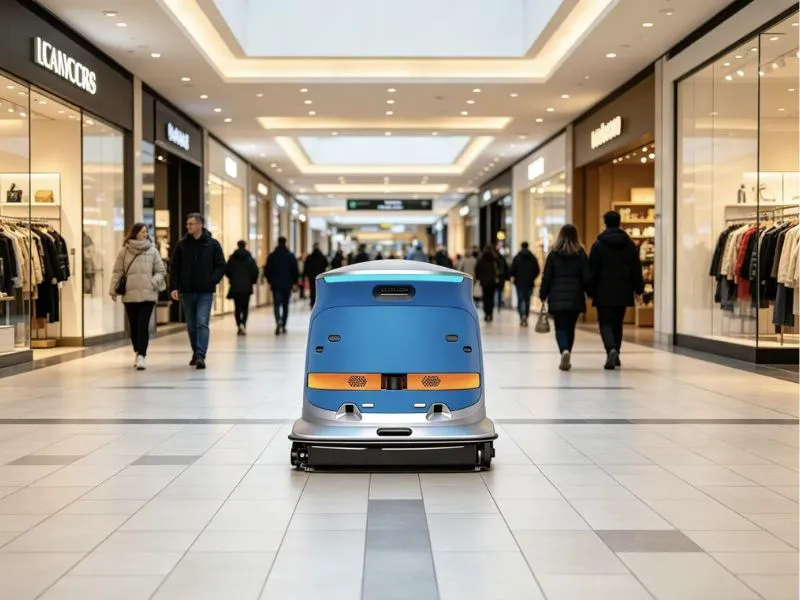
The category is real, and it is growing fast. But not every product sold under the "commercial" label actually earns that label. Some are home devices in bigger housings. Others are genuine industrial autonomous vacuum and scrubber systems built for serious facility management automation. The difference in performance, runtime, and ROI is large enough to make the wrong choice very expensive. Below, I break down how these two categories differ, what the best machines can really do, which environments benefit most, and how to source one under your own brand. You can also browse the full solutions library for a wider view.
How Is a Commercial Robot Vacuum Different from a Consumer Robot?
You have seen robot vacuums in stores, in ads, tucked under kitchen counters. The commercial version looks familiar in photos. In practice, the two products share almost nothing.
A commercial robot vacuum is built for industrial floors, high-frequency daily use, and public-facing environments with strict hygiene requirements.2 It carries large water tanks, maps complex spaces with LIDAR, and functions as a multi surface cleaning robot — scrubbing and sanitizing in one pass.3 No consumer device comes close.
Size and Scale Are Everything
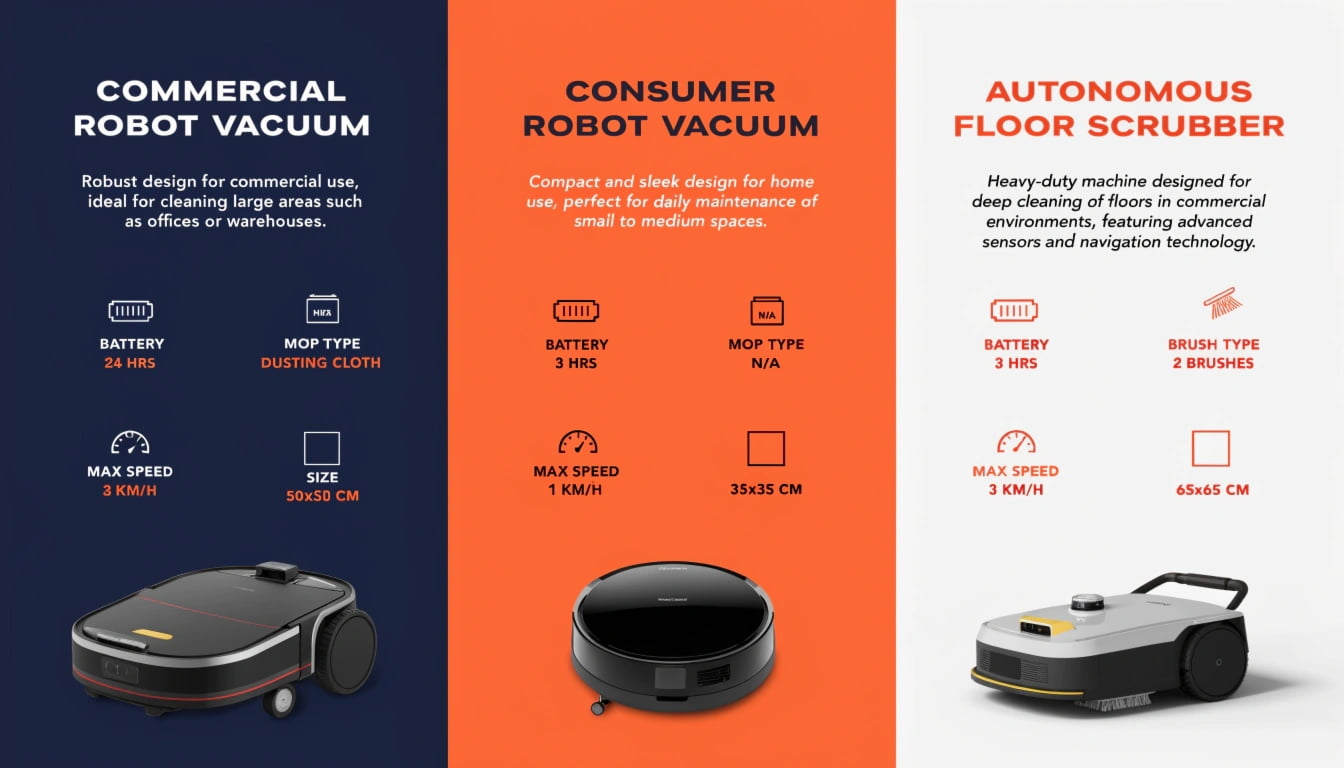
A home robot vacuum handles 800 to 1,500 sq ft before it stops to recharge. A heavy duty autonomous scrubber covers up to 100,000 sq ft per session.
That difference puts these products in different industries — not just different price tiers.
What "Commercial Grade" Really Means in Practice
Here is a direct comparison across the factors that matter most to facility managers and distributors:
| Specification | Home Robot Vacuum | Commercial Robot Vacuum |
|---|---|---|
| Coverage area | 800–1,500 sq ft | Up to 100,000 sq ft |
| Runtime | 60–120 min | All-day autonomous operation |
| Cleaning functions | Vacuum only | Sweep, vacuum, scrub, mop, UV-C sanitize |
| Water system | None or very small | Dual-tank (clean + dirty water) |
| Navigation | Basic IR sensors | LIDAR + AI vision + real-time obstacle avoidance |
| Compliance reporting | None | Auto-generated digital records |
| Noise level | 60–70 dB | 55 dB (quiet commercial vacuum robot) |
The navigation difference matters most. A home unit bounces around a room. A commercial robotic floor sweeper follows a precision-mapped route — the same path, the same results, every single cycle.
That consistency is what makes it a credible business cleaning solution rather than a device you run once and quickly forget about.
Noise Level Changes Your Entire Deployment Model
Most people treat noise as a comfort issue. In facility operations, it is a hard operational constraint.
A low noise commercial floor scrubber running at 55 dB can operate during business hours. A loud machine cannot. It gets pushed to overnight or pre-dawn slots — which means overtime costs or fully unattended operation with no oversight at all.
A daytime autonomous cleaning robot changes this equation entirely. You run it through hotel corridors, open-plan offices, and active retail floors during live hours — without a single noise complaint.
The Manual vs Autonomous Floor Scrubber Question
The most common pushback I hear from facility managers: "My crew knows the space. Can a robot really replace that?"
In terms of coverage consistency and documented compliance, the autonomous floor scrubber wins clearly. A human operator varies. A programmed machine does not. It runs the same route, at the same time, generates the same log, and does not take unplanned days off.
Where human judgment still wins is in highly unexpected situations. That gap is closing fast with AI vision systems — but it is worth acknowledging honestly.
What Can a Fully Autonomous Commercial Vacuum Actually Do?
Most facility managers I speak with underestimate what modern machines can do. They picture a device that vacuums. The actual function list is considerably longer.
A fully autonomous commercial cleaning robot sweeps, vacuums, wet scrubs, UV-C sanitizes, detects and treats liquid spills, self-cleans its brushes and tanks, and generates digital compliance reports — all in one unattended cycle.4 It is a true industrial autonomous vacuum and scrubber, not just a floor sweeper with smarter navigation.
Six Functions in One Unattended Machine
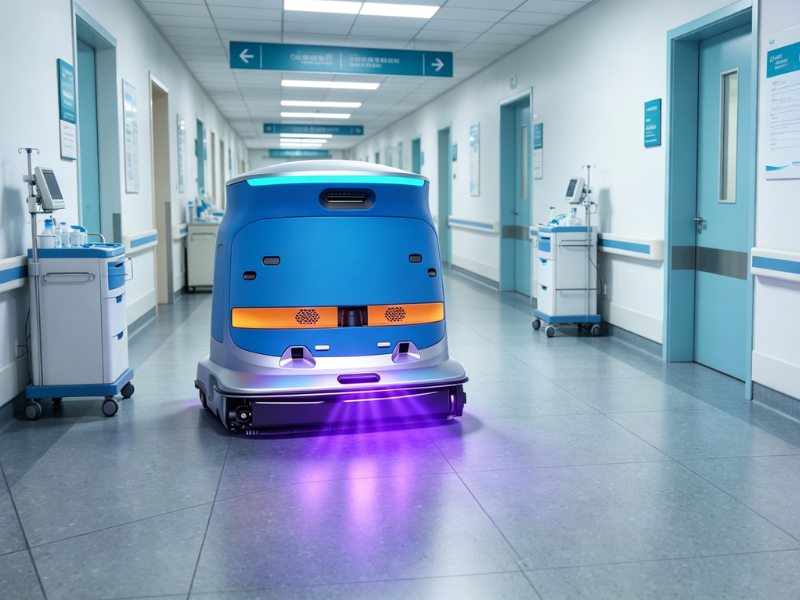
When I first reviewed the spec sheet for a six-in-one commercial unit, I expected some of the functions to be marketing language. They are not. Each one is an active, separate system running in sequence or simultaneously:
- 🧹 Sweeping — rotating brushes clear dry debris from all hard floor surfaces
- 💨 Vacuuming — suction captures fine dust and particles the brushes miss
- 🪣 Wet scrubbing — the cleaning deck applies water and physically scrubs the surface
- 🌊 Mopping — a trailing pad lifts residual moisture and loose debris
- 💡 UV-C disinfection — projected onto the floor during every travel pass, making it a genuine uv cleaning robot and uv robot cleaner in one
- 🏠 Auto self-cleaning — the machine returns to base, flushes brushes, and sanitizes its own tanks
This is what makes the S60 a genuine UV-C sanitizing robot — not a marketing label, but a function that runs every time the machine moves across the floor.
AI-Vision and Spill Detection
Most autonomous scrubbers follow a fixed route and ignore the unexpected. An AI-vision cleaning robot works differently.
The spill detection commercial robot system uses an onboard camera to identify liquid on the floor in real time.5 The machine diverts, treats the area, and logs the event — all without any human input required.
For hospitals, hotel lobbies, school canteens, and airport terminals, this is not a bonus feature. It is a safety and liability requirement.
The Compact Under-Desk Advantage
Here is a specification most product pages bury — but should lead with: machine height.
Standard office desks sit at 720–750mm from the floor. Most commercial cleaning robots cannot fit underneath them. At 550mm tall, this qualifies as a genuine compact under-desk robot scrubber — a low profile commercial robot vacuum that slides under standard desks, restaurant tables, and waiting room chairs with no furniture moved first.
At scale — across a corporate campus or a large hospital — removing furniture rearrangement from the daily cleaning workflow saves a significant number of labor hours every year. The full ROI model is at yuntupro.com/spec-and-roi.
What Highly Autonomous Robotics Looks Like on a Real Schedule
The phrase highly autonomous robotics sounds abstract until you attach it to a real deployment timeline. Here is what one machine executes in 24 hours without human intervention:
- 🗺️ Navigate 100,000+ sq ft using a saved precision map
- 🛗 Call and ride elevators independently between floors
- 🔋 Return to base automatically to recharge and self-clean
- 📋 Generate timestamped digital compliance reports after each cycle
- 🚨 Identify and treat unexpected floor spills mid-route
That is genuine facility management automation — a documented, repeatable, auditable workflow that runs identically every single day.
Which Facilities Gain the Most from a Commercial Robot Vacuum?
Not every building delivers the same return on automation. Some environments see measurable results from day one. Others need more careful planning before the numbers work.
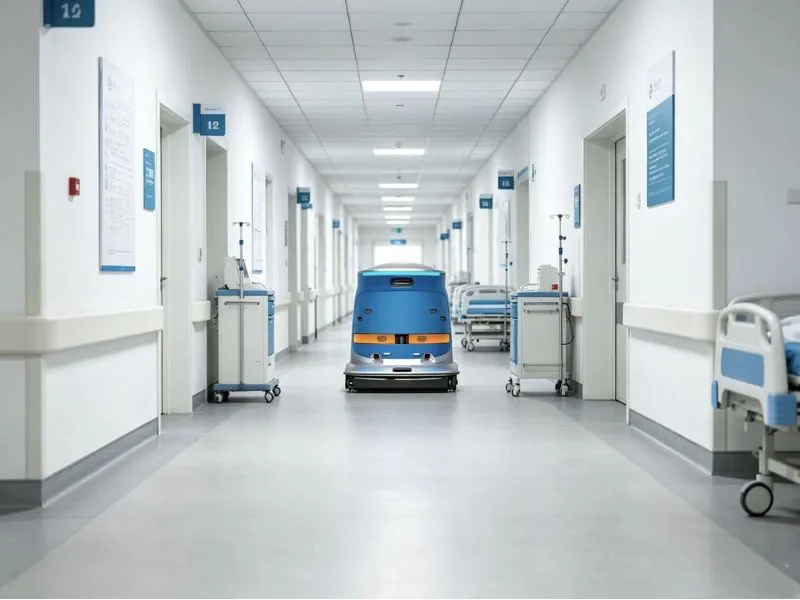
The facilities that gain most from a commercial robot vacuum include hospitals, hotels, malls, and large office buildings. They share large floor areas, strict hygiene requirements, high staff turnover, and noise-sensitive hours — conditions where autonomous floor scrubbers deliver the strongest commercial cleaning robot ROI.
Healthcare: Compliance Drives the Business Case
An autonomous cleaning robot for hospitals is primarily a compliance tool — with labor savings as a secondary benefit.
A hospital grade autonomous scrubber generates machine-timestamped cleaning logs after every cycle. For infection control managers, that automated electronic trail may be the difference between passing an audit and failing one.
The triple-layer disinfection system is what makes it a credible healthcare floor sanitizing robot:
| Disinfection Layer | Location | How It Works |
|---|---|---|
| Ozone | Clean water tank | Runs continuously during all scrubbing passes |
| Nano-silver | Dirty water tank | Prevents bacterial regrowth at the source |
| UV-C light | Floor surface | Projected directly during every travel pass |
This is what separates a genuine UV-C sanitizing robot from a standard floor scrubber with a UV lamp bolted on as an afterthought. More detail is on the healthcare solutions page.
Hospitality: Where Noise Decides Everything
I have spoken with hotel operations directors who paid overtime every morning just to get floors cleaned before 8am. The reason was simple: their existing machines were too loud to run once guests woke up.
A hotel corridor cleaning robot running at 55 dB solves this directly. The autonomous hospitality vacuum function operates through occupied corridors and near room doors without disturbing a single guest.
Hotel teams can spread cleaning across the full day — not compress everything into a narrow pre-dawn window. Add independent elevator navigation, and one machine handles multi-floor hotel cleaning as a single automated workflow. No accompanying staff. No scheduling conflicts. Everything logged automatically.
This is how you reduce facility cleaning labor costs in hospitality without cutting service quality.
Retail and Mall Environments
A shopping mall autonomous scrubber or retail floor cleaning robot faces constant challenges: high foot traffic, random spills, and display layouts that shift every few days.
The AI vision system handles this in real time. The machine reroutes around shoppers and obstacles without stopping. No human needs to step in and redirect it.
For large retail formats, one commercial robotic floor sweeper or autonomous industrial sweeper could cover an entire floor plan without adding a single staff member to the payroll. That is a genuine strategic cleaning solution for retail facility teams.
Corporate Office Buildings
An office building robot scrubber with genuine under-desk reach fills the gap that most commercial robots leave open.
At 550mm, the machine cleans under standard desks without any furniture moved first. Paired with multi-floor elevator navigation, one unit manages an entire office tower on a programmed schedule — between meetings, overnight, or during low-traffic windows.
Real deployment data is available in the case studies section. Environment-specific configuration details are on the commercial solutions page.
Can You Source a Commercial Robot Vacuum Under Your Own Brand?
You are not buying this for your own facility. You are sourcing to resell — and you need factory pricing, your brand on the hardware, and a supplier you can still reach six months after the order ships.
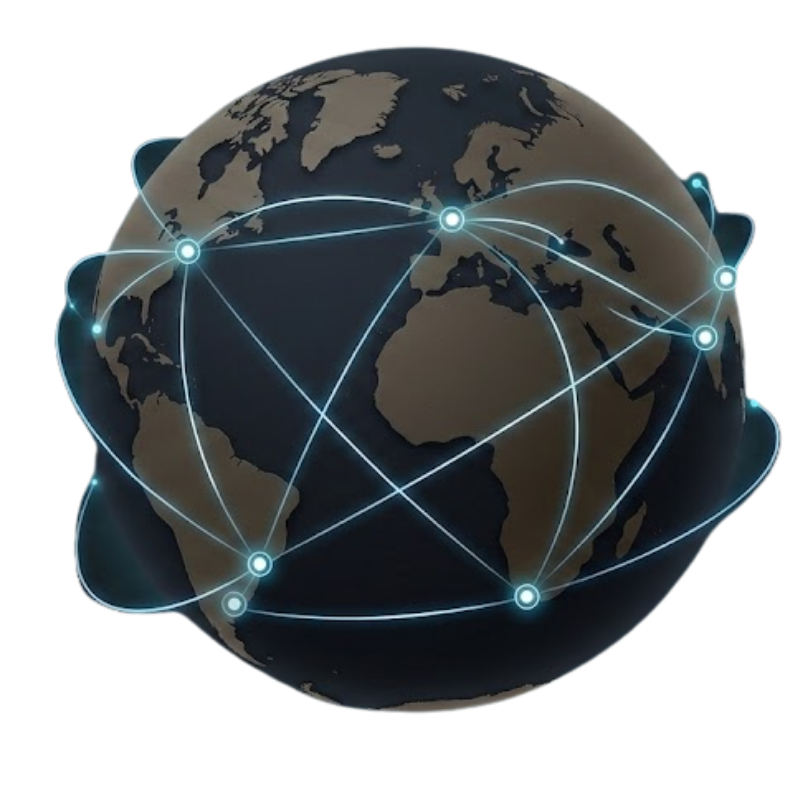
Yes, commercial robot vacuums are fully available as white label and OEM products. A white label cleaning robot lets distributors brand finished hardware as their own. The right commercial cleaning robot manufacturer delivers private label packaging, regional firmware, compliance certificates, and spare parts at factory direct commercial robot vacuum pricing.
The OEM Model Explained Simply
An OEM autonomous floor scrubber is a finished product built to spec, shipped without brand markings, ready for the buyer to apply their own identity.
A private label commercial cleaning robot goes one step further — the manufacturer ships with your brand name, your documentation, and your color scheme already applied. Both options exist. The right one depends on your volume, your market, and your local technical capacity.
For most serious distributors, the private label route delivers the strongest market positioning and the cleanest customer experience at the end-user level.
What a Credible White Label Program Actually Includes
When I evaluate a commercial cleaning robot manufacturer for white label facility management robotics work, I use this checklist with every distribution partner I speak with:
✅ Modular, Tool-Free Hardware Design
A customizable industrial cleaning robot with snap-fit, tool-free components keeps your local service costs low. Your technicians do not need specialist training — they need a pre-packaged parts kit and a clear manual.
✅ Regional Firmware and Language Support
A wholesale autonomous floor scrubber shipped to Germany, Australia, or Japan needs a different interface language. Confirm regional firmware availability before placing any volume order.
✅ Compliance Certification in Your Brand Name
Your customers need CE, FCC, or local-equivalent certificates showing your company name — not the factory's. Any credible factory direct commercial robot vacuum supplier includes this as a standard part of the OEM package.
✅ Spare Parts Kit (SPK) Availability
Pre-packaged SPKs reduce your local inventory burden and let you offer predictable service contracts to end customers. Ask about lead times and minimum order quantities before you sign anything.
✅ Geographic Territory Protection
A serious white label facility management robotics partner protects volume distributors with regional exclusivity. This prevents parallel imports from undercutting your pricing in your own market.
🔑 "A white label program is not just packaging. It is hardware, firmware, certifications, territory protection, and ongoing support — delivered as a complete business system you can take to market immediately."
Shenzhen Yuntu Zhixing Technology Co., Ltd. operates exclusively under the OEM and white label model. The partner program page covers the full structure. For pricing or minimum order discussions, use the contact page. The product hub is the best starting point before any sourcing conversation.
Conclusion
Commercial robot vacuums are real, capable, and available under your brand. The right machine handles compliance, cuts labor costs, and scales across any facility type. Start exploring here.
References & Source Notes
-
SEC EDGAR Filing (2025). View source. Industry documentation supports that autonomous floor-cleaning machines are deployed in large indoor facilities — including hospitals, hotels, offices, and retail spaces — for scheduled cleaning tasks. This supports the general product category description. It does not establish that these machines fully replace manual cleaning crews in all facility types. ↩
-
ResearchGate — Designing and Optimization of an Autonomous Vacuum Floor Cleaning Robot (2020). View source. Supports the category-level distinction that commercial-grade autonomous vacuums are designed for demanding environments and higher duty cycles than consumer devices. Design intent varies across manufacturers and models; this is a general characterization, not a universal measured standard. ↩
-
IRJET — Floor Cleaning Robot with Vision, via Academia.edu. View source. Supports that many commercial floor-cleaning robots use LIDAR-based mapping and dual-tank wet-cleaning systems to enable multi-surface operation. Not all commercial models include every listed subsystem, and not all surfaces are necessarily covered in a single cleaning pass. ↩
-
PMC/NCBI — The Use of a UV-C Disinfection Robot in the Routine Cleaning Process (2021). View source. Supports that some commercial cleaning robots combine multiple functions — including sweeping, wet scrubbing, UV-C disinfection, self-cleaning, and automated digital reporting — within a single unit. These capabilities are not universal; feature sets differ significantly across models and manufacturers. ↩
-
arXiv — Autonomous Oil Spill Response Through Liquid Neural Trajectory (2025). View source. Supports that onboard vision systems can detect liquid spills and floor anomalies in real time. Detection accuracy depends on ambient lighting, floor surface reflectance, and the specific training data used for each model's vision system. ↩